Ozempic vs Wegovy Cost: Which One Is Cheaper in 2026?
It's the same molecule in both pens — semaglutide — yet the monthly price gap runs to hundreds of dollars and the insurance odds couldn't be more different. This guide tracks what each one actually costs you, the value you get per pound lost, and where the cheapest real semaglutide hides in 2026.


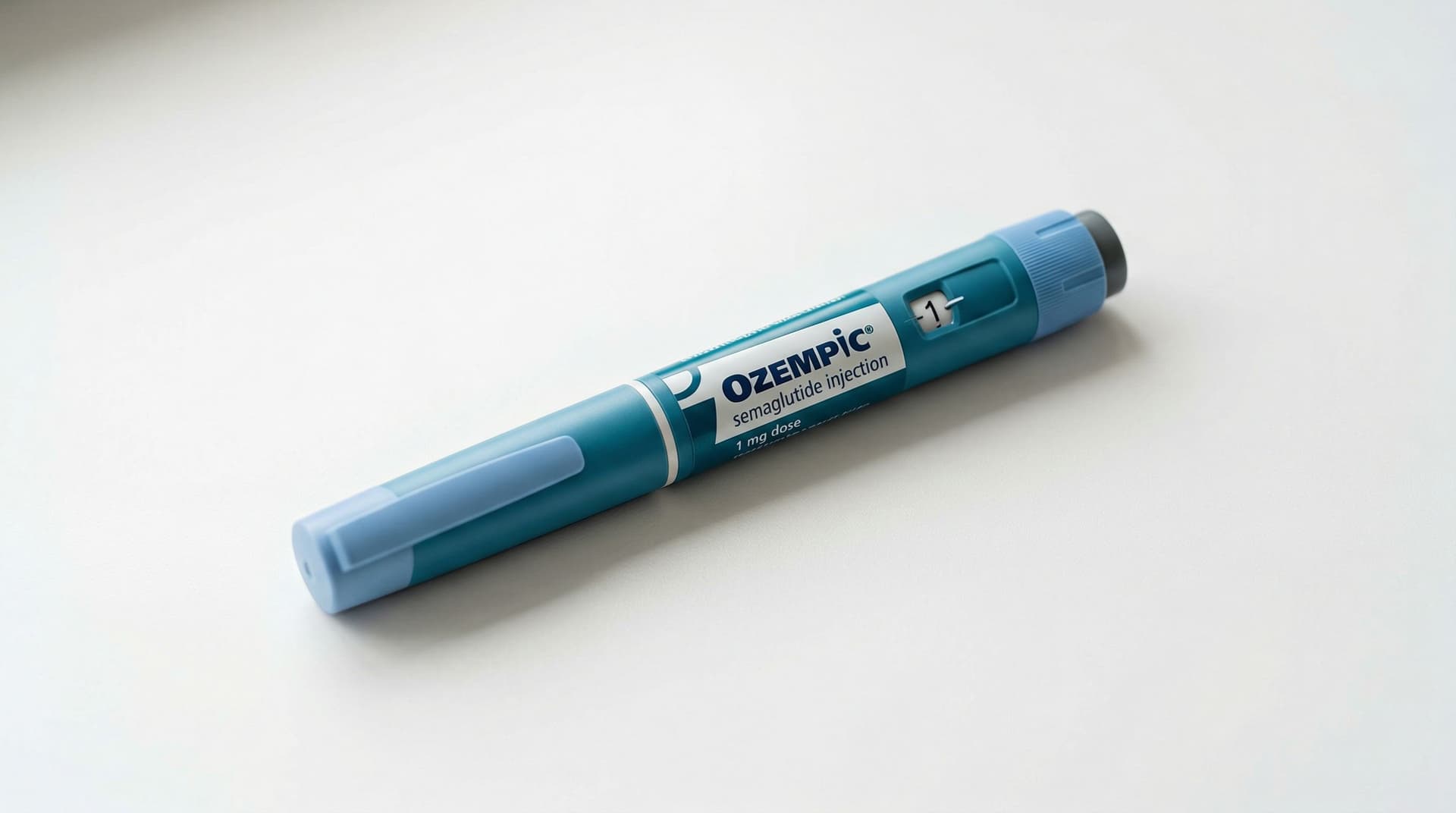
The Cost Verdict in One Line
On sticker price, Ozempic ($998/mo) undercuts injectable Wegovy ($1,349/mo)— but they're the same semaglutide from Novo Nordisk, so you're really paying for the label. Because Ozempic is approved for diabetes, insurers cover it more readily; Wegovy carries the weight-loss approval and the higher 2.4mg dose. And the cheapest FDA-approved semaglutide of all is now oral Wegovy at $149/mo, which reshuffles the entire value math.
Why Does Wegovy Cost More Than Ozempic If It's the Same Drug?
You're paying for the label, not the molecule. Both pens hold identical semaglutide, but Wegovy carries the weight-loss approval and a higher 2.4mg ceiling — and Novo Nordisk prices that premium at roughly $350 more per month.
Here's the part that catches most shoppers off guard: Novo Nordisk makes both products, and both are built around the exact same active ingredient — semaglutide. There is no secret ingredient justifying the gap on your pharmacy receipt. Semaglutide is a GLP-1 receptor agonist that copies the incretin hormone GLP-1 your gut releases after a meal, and it earns its money by:
- Slowing gastric emptying — meals linger in your stomach, so fullness lasts longer
- Quieting appetite signals — dialing down the hunger and food-noise circuits in your brain
- Sharpening insulin response — so your body clears blood sugar more efficiently
- Tamping down glucagon — cutting the amount of sugar your liver dumps into your bloodstream
A useful way to frame the two: Ozempic is the value-tier package and Wegovy is the premium one, even though the contents are the same. What you pay extra for is a higher dose ceiling, a different FDA indication, and a separate set of trials — not a better or stronger drug.
How Does Each Drug's FDA Approval Decide What You Pay?
The approval label is the single biggest factor in your bill. Ozempic's diabetes approval unlocks broad insurance coverage; Wegovy's weight-loss approval costs more but gives plans a reason to pay for slimming down.
This is where the money is decided long before you reach the pharmacy counter:
Type 2 Diabetes
Cleared by the FDA in December 2017 to help adults with type 2 diabetes manage blood sugar alongside diet and exercise, and later cleared to lower cardiovascular risk in diabetic patients with existing heart disease. That diabetes label is exactly why payers tend to cover it.
The off-label catch:Plenty of people get Ozempic prescribed for weight loss, but that use isn't FDA-approved — so if you don't have diabetes, expect to argue with your insurer or pay full price.
Chronic Weight Management
Cleared by the FDA in June 2021 for long-term weight management in adults with obesity (BMI 30+) or who are overweight (BMI 27+) with a weight-related condition, plus a later clearance to cut cardiovascular risk in people with established heart disease. The weight-loss label is what makes it cost more.
What the premium buys:the full 2.4mg ceiling and a titration plan tuned for fat loss — plus, increasingly, a coverage pathway for weight loss that Ozempic doesn't have.
Are You Paying More for a Higher Dose or Just a Different Box?
A bit of both. Wegovy's ceiling is 2.4mg/week versus Ozempic's 2mg — 20% more drug — but most Ozempic users settle at 0.5-1mg, so the real-world dose gap (and the value question) is wider than the labels suggest.
Both come as a once-weekly shot under the skin — abdomen, thigh, or upper arm — so the delivery is no different. Where they diverge is the top dose you can reach, and that ceiling is part of what you're buying:
Ozempic ramps up gently: 0.25mg weekly for the first month, then 0.5mg for at least another four weeks, climbing to a maximum of 2mg per week. In practice most people park at 0.5mg or 1mg — meaning a lot of users are paying for a pen they never max out.
Wegovy climbs more slowly to keep nausea in check: 0.25mg (weeks 1-4), 0.5mg (weeks 5-8), 1mg (weeks 9-12), 1.7mg (weeks 13-16), and a maintenance dose of 2.4mg per week. That extra 20% of medication is the headline reason Wegovy commands its higher price.
The value angle:more milligrams generally means more pounds gone, and the STEP trials confirm the 2.4mg dose outperforms lower ones. So if you only ever reach 1mg, you may be overpaying for Wegovy's headroom — and if you genuinely need the top dose, paying for Ozempic is paying for a ceiling you can't use.
Which Gives You More Weight Loss per Dollar?
Wegovy loses more total weight (15-17% vs Ozempic's 8-14%) thanks to its 2.4mg dose — but at $1,349 vs $998, the cost per pound lost lands surprisingly close, and oral Wegovy at $149 blows both away on value.
Total pounds is only half the story; what matters for your wallet is what each pound costs. Start with the clinical results, then we'll put a price on them:
- -SUSTAIN 1: ~6% at 0.5mg, ~7% at 1mg (30 weeks)
- -SUSTAIN 6: ~7% at 0.5mg, ~10% at 1mg (2 years)
- -Real-world data: 8-14% at 1-2mg doses
Note: SUSTAIN trials were designed for diabetes, not weight loss. Weight loss was a secondary endpoint.
- -STEP 1: ~15% at 2.4mg (68 weeks) vs 2.4% placebo
- -STEP 3 (with lifestyle): ~16% at 2.4mg (68 weeks)
- -STEP 5 (long-term): ~15% sustained at 2 years
STEP trials specifically studied weight loss as the primary endpoint at the 2.4mg dose.
Now do the math on value. For a 250-pound person, Wegovy's 15-17% works out to roughly 37-42 pounds, while Ozempic's 8-14%lands around 20-35 pounds. Spread the monthly price across those pounds and the two finish closer than you'd expect — Wegovy simply buys more total loss for proportionally more money. The gap exists because of Wegovy's higher 2.4mg dose and the fact it was trialed specifically for weight loss in people without diabetes. Where the value calculus truly breaks open is oral Wegovy, which delivers FDA-approved semaglutide for a fraction of either injectable price.
Ozempic vs Wegovy: The Full Price and Feature Table
At list price, Ozempic runs $998/month (diabetes label, 2mg max) and injectable Wegovy runs $1,349/month (weight-loss label, 2.4mg max). Same Novo Nordisk semaglutide, same side-effect profile — the table below shows exactly where your extra dollars go.
| Feature | Ozempic | Wegovy |
|---|---|---|
| Active Ingredient | Semaglutide | Semaglutide |
| Manufacturer | Novo Nordisk | Novo Nordisk |
| FDA Approval | December 2017 | June 2021 |
| Approved For | Type 2 diabetes + CV risk reduction | Chronic weight management + CV risk reduction |
| Dose Range | 0.25mg - 2mg/week | 0.25mg - 2.4mg/week |
| Administration | Weekly injection | Weekly injection (oral also available) |
| Avg. Weight Loss | 8-14% | 15-17% |
| Monthly Cost (no insurance) | ~$998 | ~$1,349 |
| Oral Option | No (Rybelsus is separate) | Yes — $149/mo |
| Insurance Coverage | Good (for diabetes indication) | Growing (many plans now cover for weight loss) |
| Key Clinical Trials | SUSTAIN 1-10, PIONEER | STEP 1-5, SELECT |
| Cardiovascular Benefit | Yes (SUSTAIN 6) | Yes (SELECT trial) |
Prices reflect typical self-pay costs without insurance. Actual costs vary by pharmacy, location, and insurance plan. Last updated April 2026.
Does the Pricier Wegovy Come With Worse Side Effects?
No — paying more doesn't buy you a rougher ride. Because both pens hold the same semaglutide, the side-effect list is essentially identical, led by nausea, diarrhea, and vomiting.
Spending an extra few hundred dollars a month on Wegovy doesn't change the safety story, because the molecule is the same. The most common complaints are gut-related and cluster around the weeks you're stepping up your dose:
- Nausea (most common, affects 15-44% of patients depending on dose)
- Diarrhea (affects about 15-30%)
- Vomiting (affects about 5-25%)
- Constipation (affects about 10-24%)
- Abdominal pain (affects about 6-20%)
- Headache, fatigue, dizziness (less common)
The only real difference is intensity: at Wegovy's 2.4mg ceiling, nausea and GI upset can run a touch stronger than on a typical 0.5-1mg Ozempic dose. That's the trade for the bigger weight-loss payoff. Wegovy's slow 16-week ramp is built to soften the landing, and most people find the worst settles down after the first month or two.
For both drugs, the rare-but-serious risks are the same line item: pancreatitis, gallbladder trouble, kidney strain, and a theoretical (animal-study) signal for thyroid C-cell tumors. Each carries the same boxed warning about medullary thyroid carcinoma — neither is the "safer" spend.
What Will Ozempic and Wegovy Actually Cost You in 2026?
List prices land at $998/month for Ozempic and $1,349/month for injectable Wegovy with no insurance. But the cheapest FDA-approved semaglutide on the market is now oral Wegovy at $149/month — under one-sixth of the injectable Wegovy price.
Price is usually the deciding vote, and the 2025-2026 stretch rewrote the math in ways that catch a lot of shoppers by surprise. Here's the breakdown that actually matters:
Ozempic carries a cash list price near $998 per month. Its big advantage isn't the sticker — it's the coverage: with a type 2 diabetes diagnosis, most plans pick up the tab. Use it off-label for weight loss and that safety net gets shaky; some plans pay, plenty don't. Novo Nordisk savings cards can trim the bill for commercially insured patients.
Injectable Wegovy sits higher at roughly $1,349 per month cash. The flip side is that its weight-loss approval has pushed coverage up sharply since 2024 — most major commercial insurers now pay for qualifying patients (BMI 30+, or 27+ with a related condition). Medicare joins in July 2026 under the GLP-1 Bridge program.
Oral Wegovy — the semaglutide tablet — landed in January 2026 at a list price of just $149 per month for the starting dose. That single number makes it the cheapest FDA-approved route to semaglutide by a wide margin and the obvious starting point for anyone paying out of pocket.
Where the savings live:if you're self-pay and cost is the deciding factor, oral Wegovy at $149/month is the clear value winner among FDA-approved semaglutide. Want to see every program ranked by price? Our cheapest GLP-1 programs guide has the full leaderboard.
Why the $149 Oral Wegovy Tablet Upends the Whole Comparison
Oral Wegovy is a once-daily semaglutide pill — no needles — that launched in 2026 at $149/month for the lowest dose. At that price it's the cheapest FDA-approved semaglutide available, undercutting both injectables by hundreds of dollars.
When Novo Nordisk rolled out Oral Wegovyin January 2026, the old "Ozempic vs Wegovy" question stopped being a two-horse race. A daily tablet at $149 changes what value even means here:
- No needles, no pens: a tablet each morning with a small sip of water — nothing to inject
- The lowest price of the three: $149/month to start, well under injectable Ozempic and Wegovy
- Carries the weight-loss approval: unlike Ozempic, the oral version is FDA-cleared specifically for weight management
- Identical molecule: the same semaglutide, formulated with an absorption enhancer so it survives your stomach
- Dose steps: 3mg, 7mg, and 14mg daily tablets, climbing over several weeks
What you give up for the savings is a little daily discipline. A weekly shot is genuinely "set it and forget it," whereas the pill demands routine: take it first thing, on an empty stomach, at least 30 minutes before anything else passes your lips, with no more than four ounces of plain water. For needle-averse or budget-conscious patients, that's usually a trade well worth making.
Which One Costs You Less for Your Situation?
If you have type 2 diabetes or a plan that already covers Ozempic, that's your cheapest route. If weight loss is the goal and you want the full 2.4mg dose, Wegovy earns its premium — and if you're paying cash either way, oral Wegovy at $149 usually wins outright.
The cheapest option isn't the same for everyone — it hinges on your diagnosis, what your plan will pay for, and how much you care about the top dose. Here's how it shakes out:
- -You have type 2 diabetes — that on-label use unlocks the best insurance coverage
- -Your formulary already pays for Ozempic but not Wegovy
- -You do well at lower doses (0.5mg-1mg) and don't need the 2.4mg ceiling
- -Blood sugar control is the main job and the weight loss is a welcome bonus
- -Dropping weight is the entire point of treatment
- -You want the full 2.4mg dose to push for maximum results
- -You'd rather skip needles entirely — the oral tablet has you covered
- -You want a drug actually approved and trialed for weight management, not used off-label
- -Price is the deciding factor — oral Wegovy at $149/mo is the cheapest FDA-approved semaglutide
Frequently Asked Questions
If I switch from Ozempic to Wegovy, will it cost me more?
Switching itself is simple — both are semaglutide, so your doctor usually carries your current Ozempic dose onto the matching step of the Wegovy schedule and keeps climbing toward 2.4mg, with no washout needed. The cost question is separate: injectable Wegovy lists higher than Ozempic, so unless your plan covers Wegovy for weight loss, expect a bigger bill after the switch — which is exactly why many people land on the $149 oral version instead.
Which is actually cheaper, Ozempic or Wegovy?
On cash list price, Ozempic (~$998/mo) beats injectable Wegovy (~$1,349/mo). But the real cheapest is oral Wegovy at $149/mo for the starting dose. Insurance flips the picture: Ozempic tends to be covered well for people with diabetes, while Wegovy's weight-loss coverage is expanding fast. Your cheapest path depends far more on your diagnosis and plan than on the sticker price.
Is the extra money for Wegovy worth it for weight loss?
Often, yes, if weight loss is the goal. Wegovy delivers about 15-17% body weight loss at its 2.4mg dose versus 8-14% for Ozempic at typical doses, so you're paying more but getting more total loss. The value gets tighter once you calculate cost per pound — and oral Wegovy at $149 changes the equation entirely by delivering FDA-approved semaglutide for a fraction of either injectable.
Can I save money by using cheaper Ozempic for weight loss without diabetes?
You can be prescribed Ozempic off-label for weight loss — it happens constantly — but the savings often evaporate at the pharmacy. Without a diabetes diagnosis, insurers frequently decline to cover it, leaving you with the full ~$998 cash price. Wegovy carries the weight-loss approval that gives plans a reason to pay, so for non-diabetics it can end up cheaper out of pocket despite the higher list price.
Does paying more for Wegovy mean worse side effects?
No. The side-effect profile is the same because it's the same drug. The 2.4mg Wegovy dose can bring slightly stronger nausea or GI upset than a typical 0.5-1mg Ozempic dose, but the extended 16-week ramp is designed to ease that, and most people settle in after the first month or two. You're paying for more dose and the weight-loss label, not for extra discomfort.
How does the $149 oral Wegovy stack up on cost?
Oral Wegovy is a once-daily semaglutide tablet that launched in January 2026 at $149/month for the starting dose — the cheapest FDA-approved semaglutide you can get. It's approved for weight loss, needs no injection, and uses the same molecule as the pens. You take it on an empty stomach each morning. For anyone paying out of pocket or wary of needles, it's the strongest value play of the three.
Will Ozempic ever get a cheaper weight-loss approval?
Don't count on it. Novo Nordisk has no announced plans to pursue a weight-loss indication for Ozempic, and there's little incentive when Wegovy already holds that approval at a higher price. Ozempic will most likely stay a diabetes drug, with off-label weight-loss prescribing continuing — meaning your cheapest approved-for-weight-loss option remains Wegovy, especially the oral tablet.
Could I stretch my budget by taking Ozempic and Wegovy together?
Absolutely not — and it would be dangerous, not thrifty. Both contain the same active ingredient, semaglutide, so taking them together is effectively doubling your dose into overdose territory. There's no cost benefit and real harm. Your doctor will prescribe one product at a time, never both.
See Who's Charging the Least for Your GLP-1
We track the real monthly price across verified telehealth programs prescribing Ozempic, Wegovy, and other FDA-approved GLP-1 medications — so you can stop overpaying.