How GLP-1 Medications Actually Work Step by Step
A weekly injection that rewires hunger sounds like marketing — until you follow the biology. These drugs do not suppress appetite with willpower or stimulants; they borrow a hormone your own gut already makes and keep its signal switched on. Below, we walk through exactly what fires, where, and in what order, then translate that into what you can expect from each brand and how to weigh the price against the payoff.


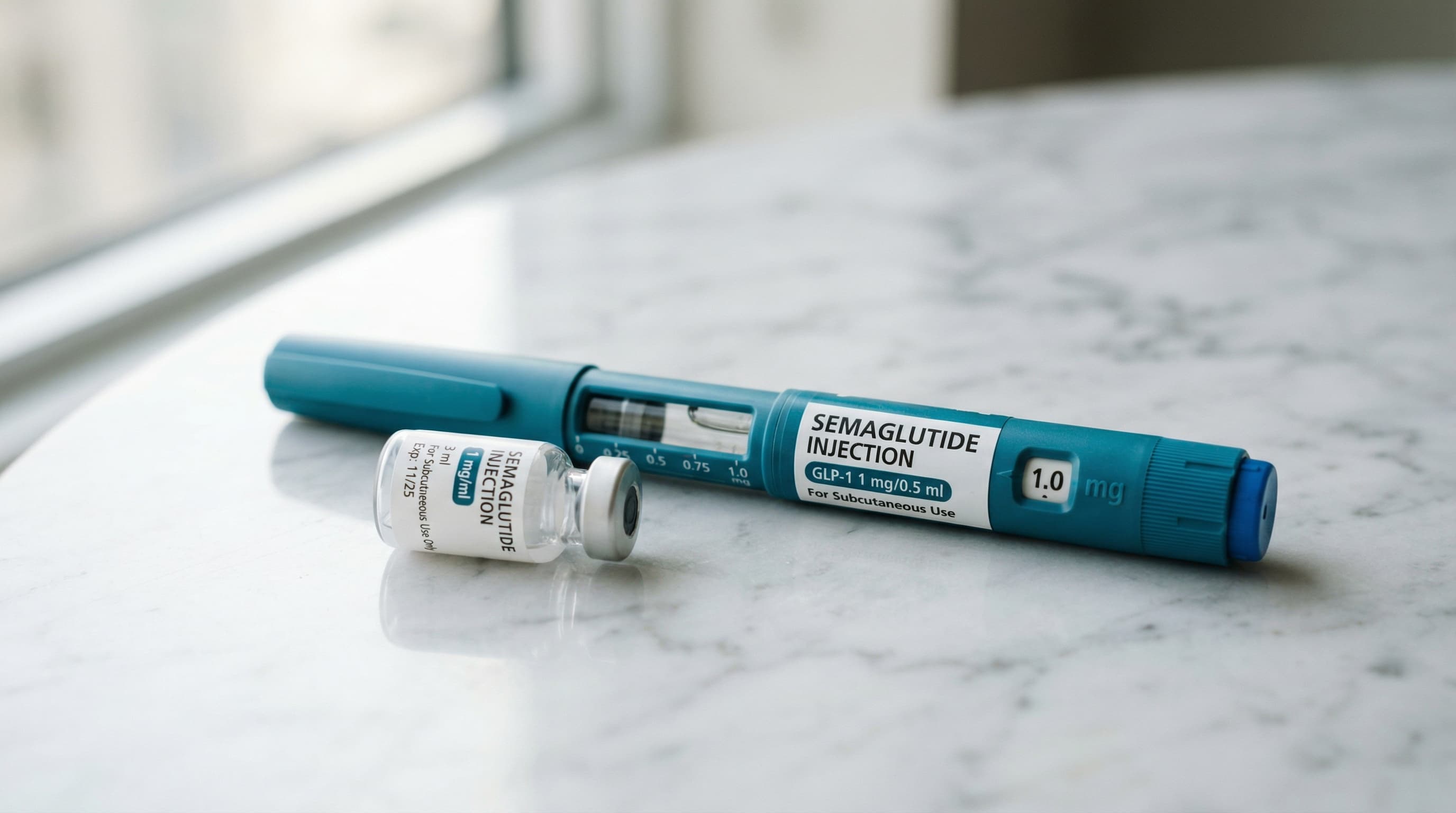
The 30-Second Mechanism, If You Only Read One Box
Meet GLP-1: The Hormone Your Gut Already Makes
Before any of these medications existed, your body was already running the same program on a smaller scale. The full name is Glucagon-Like Peptide-1, and it belongs to a group of messengers called incretins — chemical signals released by the gut to tell the rest of the body that food has arrived. Specifically, cells lining the lower small intestine, known as L-cells, squirt GLP-1 into the bloodstream within minutes of a meal.
In that brief window, GLP-1 fires off four instructions at once:
- Prompts the pancreas to put out insulin, which pulls sugar out of the blood
- Sends a "we are eating now" message to the brain so satiety can kick in
- Puts the brakes on how fast the stomach hands food off to the intestine
- Tamps down glucagon, the counter-hormone that drives blood sugar up
So why doesn't your own GLP-1 keep you slim? Timing. An enzyme called DPP-4patrols the bloodstream and chops up GLP-1 within roughly two to three minutes. The signal is real, but it flares and vanishes before it can do much lasting work — your body re-releases it meal after meal precisely because it keeps disappearing.
There is a second wrinkle worth knowing. Studies suggest that in many people living with obesity, this whole system runs at a lower gain — less GLP-1 released per meal, or a brain that reacts less to the signal it does get. The result is a hunger thermostat set a little too high, which is part of why relying on willpower alone so often fails.
It Started With a Venomous Lizard
The whole drug class traces back to an unlikely source: the spit of the Gila monster. Researchers noticed a compound in its saliva, exendin-4, that behaved almost exactly like human GLP-1 yet stuck around far longer in the body. That single observation became the first approved drug (exenatide/Byetta) and the template for everything that followed.
The Engineering Trick That Made It Last Days
On a prescription label these drugs are called GLP-1 receptor agonists — an agonist being anything that switches a receptor on. In plain terms, they are lab-built copies of the gut hormone, redesigned to survive in the body for days instead of the two or three minutes nature allows.
Getting there took two clever edits. First, chemists tweaked the molecule's amino-acid backbone just enough that the DPP-4 enzyme no longer recognizes it as a target — the molecular equivalent of changing the locks so the cleanup crew walks right past. Second, they tethered it to albumin, an abundant blood protein that drags the drug around like a slow-release chaperone, keeping a steady level circulating between doses.
Add those tricks together and one weekly shot of semaglutide keeps GLP-1 receptors switched on for the full seven days — versus the few-minute flicker of the hormone you make yourself. That round-the-clock activation, not any one dramatic event, is what compounds into real changes in appetite, glucose, and weight over months.
A useful mental picture: your natural GLP-1 is a lamp on a motion sensor that blinks on for a moment after each meal. The medication replaces it with a light left running on a dimmer all day. The brain stops getting the message in flashes and starts receiving it as a steady, ongoing cue that you are fed — even at 4 p.m. when the snack drawer usually wins.
Slower Digestion, Longer Fullness
Ask anyone a few weeks into treatment what surprised them and the answer is usually the same: a normal-sized plate now feels like too much. That is not your imagination or self-discipline finally kicking in. It is a concrete, measurable shift called delayed gastric emptying.
Picture the stomach as a holding tank that normally drains about half a meal into the intestine within two to three hours. On a GLP-1 drug that drain slows, and the same meal can linger four to five hours or more. Because food is still physically sitting there, the stomach keeps telling the brain "still working on the last one" long after you would otherwise be hungry again.
That single change explains a cluster of things patients describe:
- Smaller portions feel like enough: the tank is already part-full, so fullness arrives several bites earlier than it used to
- The grazing stops: the low-grade between-meal hunger that powers most snacking largely fades
- Tastes shift: rich, greasy, or very sweet foods often lose their appeal, possibly because they sit heaviest when digestion is already slowed
- Why nausea shows up: the flip side of food lingering is that an over-full, slow-emptying stomach can turn queasy — which is exactly why nausea tops the side-effect list, especially in the early weeks
The Reason You Start Low and Climb Slowly
Every GLP-1 plan opens at a deliberately tiny dose and steps up over roughly four to five months — and that schedule is not just caution for caution's sake. Jumping straight to the full dose would slam the brakes on digestion before your gut has adapted, leaving most people miserably nauseated. The slow ramp gives the GI tract time to settle into the new pace.
Turning Down the Volume on "Food Noise"
The stomach effects are real, but they are not what makes patients emotional in the doctor's office. That honor goes to what happens upstairs. Over and over, people describe the disappearance of "food noise" — the running mental soundtrack of cravings, meal-planning, and intrusive thoughts about eating that never quite shuts off for many people with obesity.
The reason is that GLP-1 receptors are not confined to the gut. They sit in two brain regions that matter here: the hypothalamus, the body's hunger-and-energy control panel, and the mesolimbic reward system, the circuit that lights up over anything pleasurable. Switch those receptors on and two separate things shift at the same time.
1. The Hunger Dial Gets Turned Down
In the hypothalamus, the drug dials back two of the body's most powerful "eat now" signals — neuropeptide Y and AgRP — while boosting POMC activity, which pushes you toward feeling satisfied. The combined effect is not a temporary distraction from hunger; it is a lower baseline setting. Food simply occupies less of your attention.
2. The Craving Circuit Calms Down
Over in the reward system, GLP-1 activity blunts the dopamine spike that food cues normally trigger. Imaging studies show that, in obesity, just seeing or smelling appealing food can overdrive these circuits; the medication brings that reaction back toward normal. Patients put it bluntly: "a doughnut on the counter does nothing for me now," or "I genuinely forgot to have lunch."
That same craving-circuit effect is the reason scientists are now testing GLP-1 drugs well beyond weight — in alcohol use disorder, gambling, and other compulsive behaviors. If the mechanism that quiets food urges generalizes, it might dampen other compulsions too, though this line of research is still young and far from settled.
Where the Phrase "Food Noise" Came From
You will not find "food noise" in a textbook — patients invented it to name something clinicians had never quite captured: mentally drafting dinner while still chewing lunch, feeling pulled to eat with a full stomach, the low hum of snack-thoughts all day long. Because GLP-1 drugs act on the very brain circuits that generate those thoughts, the chatter fades. Plenty of patients say that quiet, more than the number on the scale, is what changed their life.
The Blood-Sugar Side of the Story
It is easy to forget that these were diabetes drugs first and weight drugs second. The glucose control wasn't a happy accident — it was the whole point, and it still runs in the background of every prescription. Here is the chain of events.
After you eat and blood sugar climbs, the activated GLP-1 receptor nudges the pancreas to send out more insulin. The elegant part is that the effect is glucose-dependent: the push only happens while sugar is actually high, and it backs off once levels normalize. That built-in governor is why GLP-1 drugs rarely cause hypoglycemia — the dangerous low-sugar crashes common with older agents like sulfonylureas, which keep flogging insulin regardless.
There is a second move happening on the other side of the ledger. GLP-1 also quiets glucagon, the signal that orders the liver to dump stored sugar into circulation. With glucagon turned down, the liver stops over-producing glucose between meals — a major source of the stubbornly high fasting numbers in type 2 diabetes.
And then the weight loss closes the loop. Shedding even 10-15% of body weight on its own makes cells listen to insulin again, easing the resistance that defines the disease. The two effects reinforce each other, and for some patients the combination is enough to push type 2 diabetes into outright remission.
What Else These Drugs Do to the Body
Here is where the story gets genuinely surprising. As researchers tracked patients over years, the benefits kept spilling past the scale and the glucose meter into the heart, liver, kidneys, airways, and possibly the brain. A few of these are now locked in with hard trial data and FDA labels; others are still being chased down. Below is the current state of play.
The Heart
In the SELECT trial, semaglutide cut major cardiac events — heart attack, stroke, and cardiovascular death — by 20% among people with obesity. Tellingly, the benefit held even after accounting for weight, pointing to a direct calming effect on inflamed blood vessels. Wegovy now carries an FDA-approved heart indication on the strength of that data.
The Liver
Fatty liver — now formally called MASLD (metabolic dysfunction-associated steatotic liver disease, once known as NAFLD) — responds measurably to these drugs, with liver fat dropping over time. In trials, semaglutide resolved the more aggressive inflammatory form, MASH, in 37% of patients, and combinations like resmetirom plus semaglutide are being tested as a first-line MASH strategy.
Breathing at Night
The SURMOUNT-OSA trials found that tirzepatide eased obstructive sleep apnea (OSA) severity by as much as 63%, and many participants dropped out of the moderate-to-severe category entirely. Part of that is simple — less fat around the neck and airway — but researchers suspect the drug may also influence the muscle tone that keeps the upper airway open.
The Kidneys
The FLOW trial reported that semaglutide slowed the march of chronic kidney disease by 24% in people with type 2 diabetes. The protection seems to come from reduced kidney inflammation and scarring (fibrosis) rather than from glucose control alone — enough that the FDA broadened the label to cover kidney protection.
The Brain (Still Unproven)
The most speculative frontier is neurodegeneration. Because brain GLP-1 receptors play a role in keeping neurons alive and tamping down inflammation, scientists are asking whether these drugs could slow Alzheimer's. The EVOKE trial is putting semaglutide to that test in early Alzheimer's patients, with read-outs anticipated around 2026-2027 — until then, treat this as a hopeful question, not an answer.
Four Organs, One Coordinated Effect
None of the effects above happen in isolation — they fire together, every day the drug is active. Here is the whole machine on one page, organ by organ:
One Drug, Four Places It Goes to Work
Lights up GLP-1 receptors in the hypothalamus and reward centers, lowering the baseline hunger setting, muting food noise, and shrinking dopamine-fueled cravings. This is the single biggest reason people eat less.
Throttles gastric emptying by 30-50%, so meals linger and keep firing fullness messages up the vagus nerve to the brain. The practical upshot: smaller plates and longer gaps between them.
Triggers insulin only when sugar is high (glucose-dependent) and dials back glucagon. The result is steadier post-meal blood sugar with little hypoglycemia risk, and possibly healthier beta cells over the long run.
Curbs the liver's glucose output and the fat it stockpiles, nudges blood lipids in the right direction (lower triglycerides and VLDL), and pulls down inflammation markers body-wide.
How the Brands Stack Up
"GLP-1" is a category, not a single product, and the differences inside it are large enough to change your results — and your monthly bill. They vary by which receptors they hit, how much weight they typically shed, whether you inject or swallow, and what conditions they are approved to treat. Here is the landscape as of April 2026, with a note on where each one tends to land on value.
| Drug | Active Ingredient | Targets | Avg. Weight Loss | Dosing |
|---|---|---|---|---|
| Wegovy | Semaglutide 2.4mg | GLP-1 | 15-17% | Weekly injection |
| Ozempic | Semaglutide 0.5-2mg | GLP-1 | 10-14% | Weekly injection |
| Zepbound | Tirzepatide | GLP-1 + GIP | 18-22% | Weekly injection |
| Mounjaro | Tirzepatide | GLP-1 + GIP | 15-20% | Weekly injection |
| Rybelsus | Oral semaglutide 14mg | GLP-1 | 8-12% | Daily pill |
| Saxenda | Liraglutide 3mg | GLP-1 | 5-8% | Daily injection |
Semaglutide — the Ozempic / Wegovy / Rybelsus family
This is the name most people recognize, all of it from Novo Nordisk, and all of it the same molecule wearing different labels. Semaglutide hits just the GLP-1 receptor. Ozempic is the lower-dose diabetes version, Wegovy is the higher 2.4mg dose cleared for weight loss, and Rybelsus is the pill form approved for diabetes. Picking between them is less about chemistry than about which indication you fit and, often, which one your insurance or pharmacy prices most reasonably.
Tirzepatide — Mounjaro and Zepbound
Eli Lilly's tirzepatide raised the ceiling by working on two targets instead of one. It is a dual agonist, switching on both the GLP-1 receptor and the GIP (glucose-dependent insulinotropic polypeptide) receptor, and that second lever is the leading theory for why it tends to deliver more weight loss (18-22% versus 15-17% for semaglutide). Mounjaro is the diabetes label; Zepbound is the weight-loss one. If you are paying for results per dollar, the higher efficacy is part of the value calculation.
Liraglutide — Saxenda and Victoza
Liraglutide is the elder statesman here — back in 2014, Saxenda was the first GLP-1 approved specifically for obesity. The trade-offs show their age: it is a daily injection(not weekly) and the typical weight loss is smaller, around 5-8%. The newer drugs have largely eclipsed it, but it is still on the shelf and occasionally the right call when those options are out of stock or off the table medically.
Orforglipron — the oral wildcard on the horizon
The one to watch is Eli Lilly's orforglipron, a non-peptide GLP-1 you swallow without the empty- stomach restrictions that hobble current pills — potentially the most user-friendly option yet, and a pill is usually cheaper to make than an injectable. It is working through Phase 3 trials with an FDA verdict expected in 2026. For the current timeline and the trial numbers, see our full orforglipron FDA decision analysis for the latest timeline and clinical data.
Frequently Asked Questions
How soon will I feel a GLP-1 drug working?
GLP-1 vs GIP: what is the actual difference?
What if a GLP-1 drug just doesn't work for me?
Is 'food noise' a real thing or just a buzzword?
Could a GLP-1 drug cut my alcohol cravings too?
Why does nausea hit so many people on these drugs?
What's coming next in the GLP-1 pipeline?
How solid is the long-term safety picture?
Sources & References
- Drucker DJ. "GLP-1 receptor agonists: beyond diabetes." Nature Reviews Drug Discovery. 2023.
- Wilding JPH, et al. "Once-weekly semaglutide in adults with overweight or obesity (STEP 1)." NEJM. 2021.
- Jastreboff AM, et al. "Tirzepatide once weekly for the treatment of obesity (SURMOUNT-1)." NEJM. 2022.
- Lincoff AM, et al. "Semaglutide and cardiovascular outcomes in obesity (SELECT)." NEJM. 2023.
- Perkovic V, et al. "Semaglutide and kidney outcomes in type 2 diabetes (FLOW)." NEJM. 2024.
- Malhotra A, et al. "Tirzepatide for the treatment of obstructive sleep apnea (SURMOUNT-OSA)." NEJM. 2024.
- Newsome PN, et al. "Semaglutide for the treatment of NASH (STEP-NASH)." NEJM. 2024.
- van Bloemendaal L, et al. "GLP-1 receptor activation modulates appetite- and reward-related brain areas." Diabetes. 2014.
Now You Know How It Works — What Should It Cost?
Understanding the science is step one; finding a legitimate provider at a fair price is step two. We rank GLP-1 telehealth services on price, safety, and credibility so you can skip the guesswork.